Record a Moment
Capture something that felt good, hard or simply worth remembering — without needing to explain everything at once.
How KnowMyWhy works
KnowMyWhy separates noticing a Moment from explaining it. The current beta makes it quick to start, then leaves room for context, patterns, summaries and optional shared perspectives later.
“What changed around this Moment?”
A calm four-part sequence
The sequence supports reflection; it does not promise a particular outcome or tell someone what their experience means.
Capture something that felt good, hard or simply worth remembering — without needing to explain everything at once.
Return when it feels right to add what was happening around the Moment, what you noticed and what may have helped.
Make space for the person’s own words, preferences and perspective rather than rushing to a conclusion.
Look across separate Moments over time and decide what might be useful to revisit, share or try next.
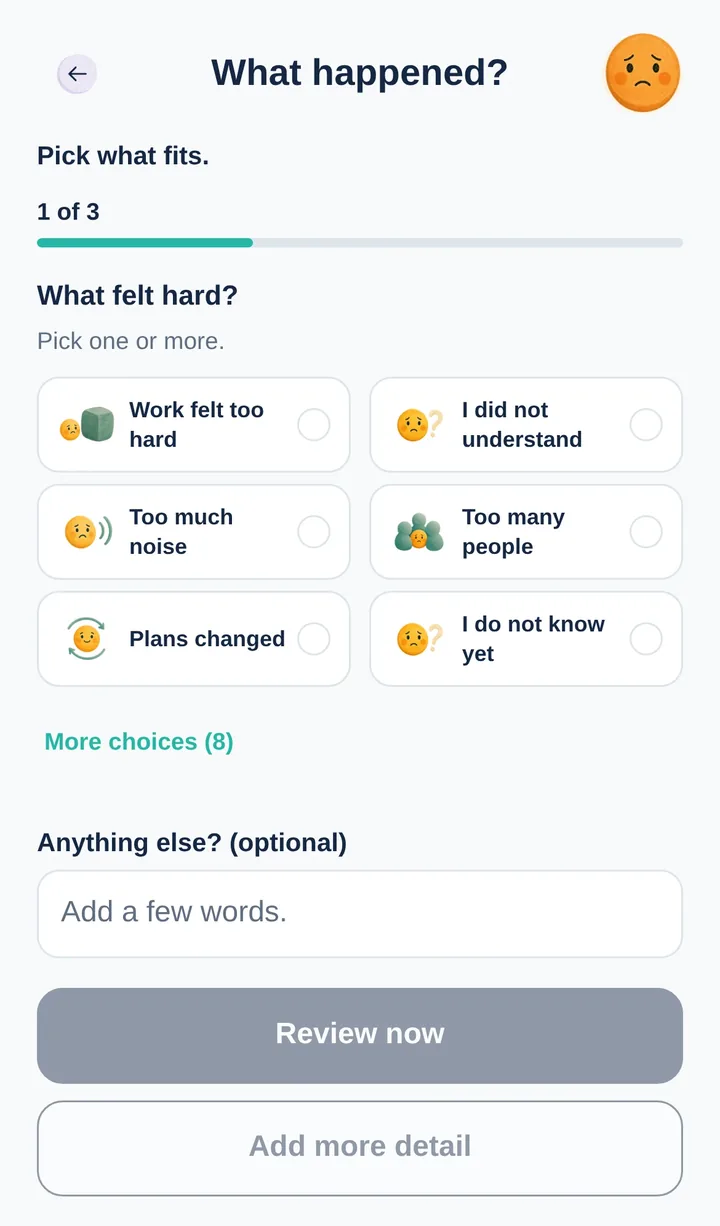
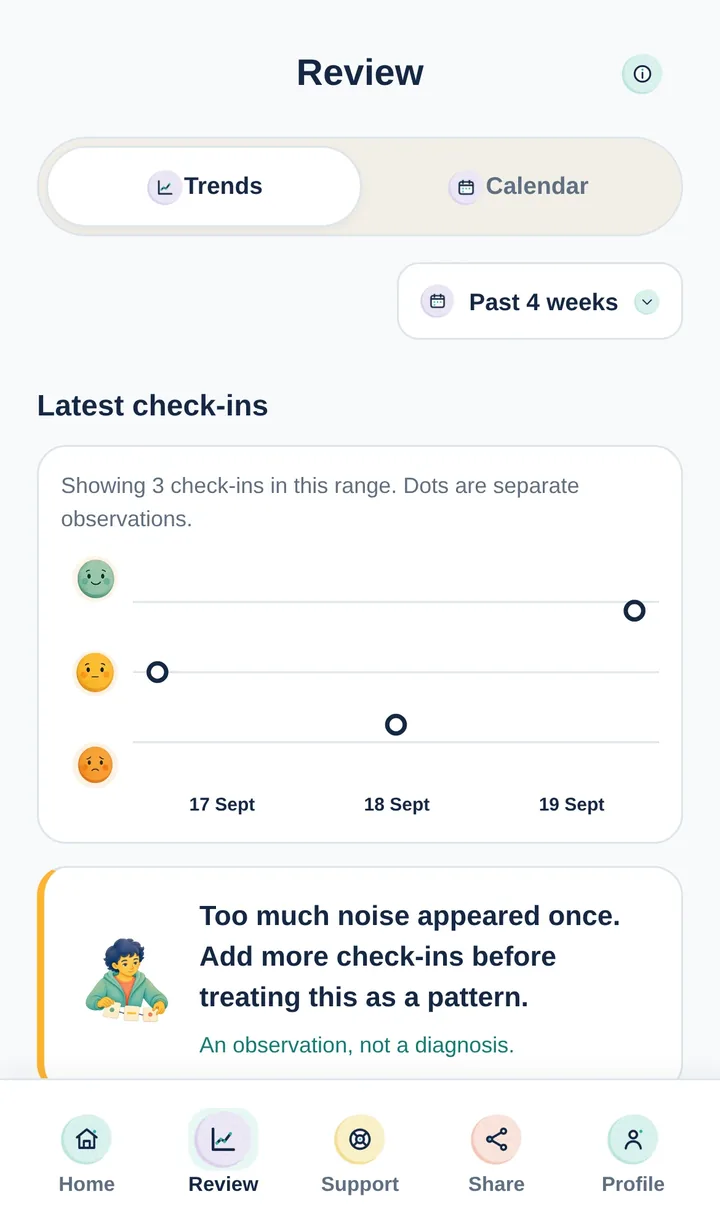
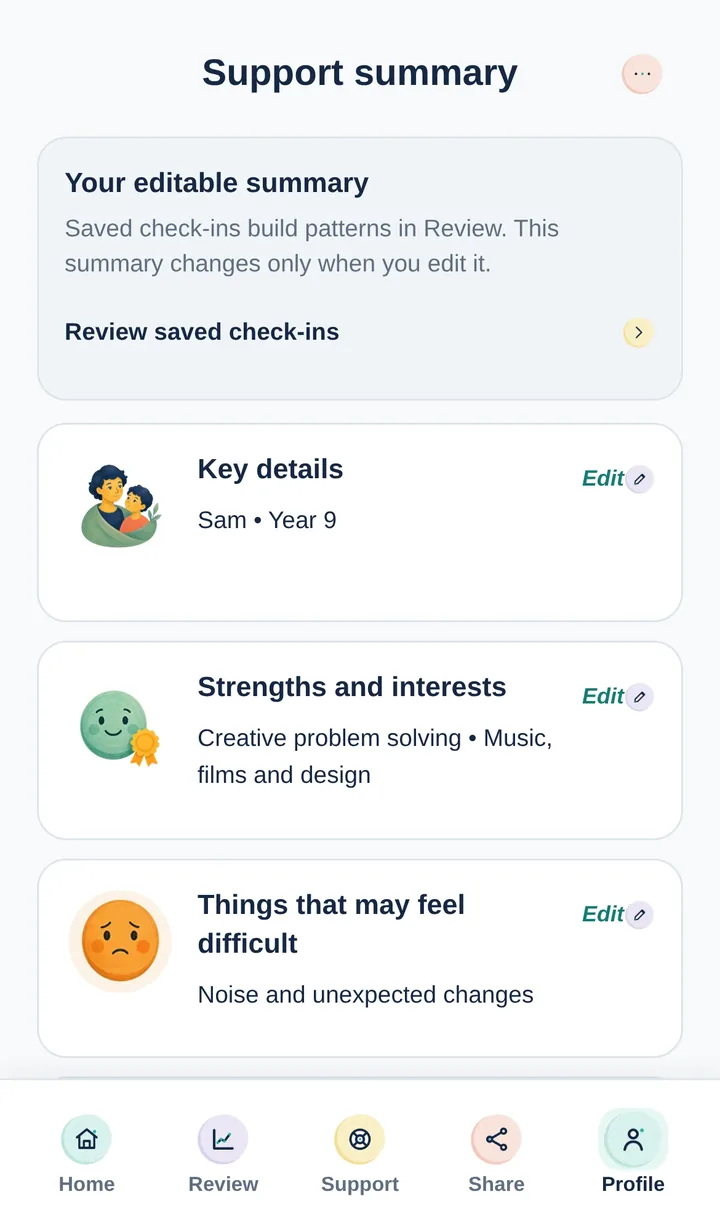
An illustrative example
Imagine several difficult arrivals are recorded. Later reflections note that quieter entrances, more processing time or knowing the first activity seemed helpful on some days. The useful next step is a conversation about that context — not an automatic conclusion about the person.
A short, factual starting point that can be revisited.
People, places, demands, transitions, sensory context or other details.
Their own view, language, preferences and interpretation.
A human decision made with the person, not by the pattern alone.
This example is illustrative. It is not a case study, evidence claim or report of a real user’s experience.
Choose your route
Explore how the personal and professional closed-beta experiences work, including optional connections between them.